
Robotic surgery in modern urology
15 June 2026 · By Urology Mauritius · Updated 9 July 2026
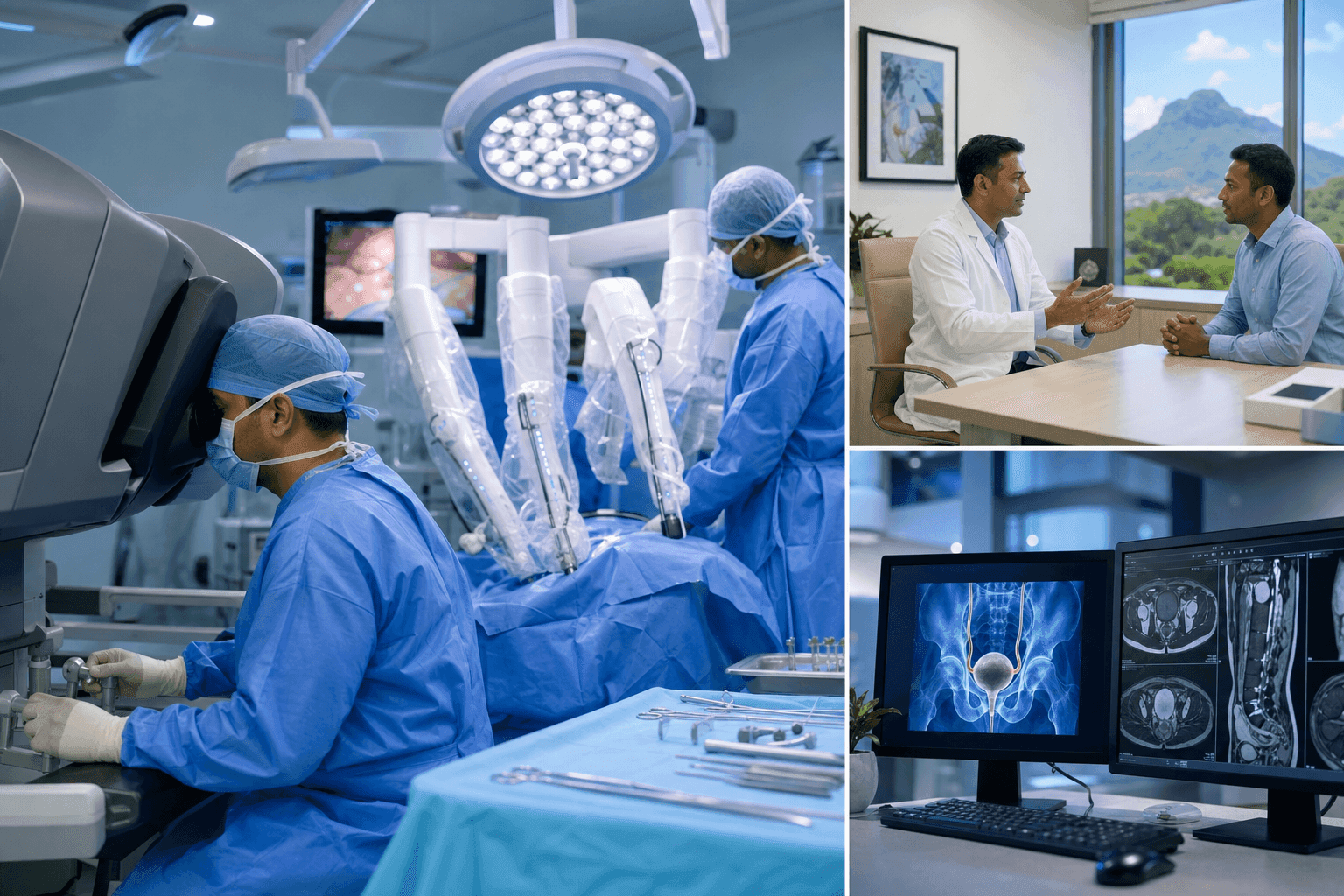
Robotic surgery sounds futuristic, and for good reason it has become one of the most important advances in modern urology. It allows surgeons to carry out delicate operations with a level of precision and control that is difficult to achieve by hand. For patients, this often means smaller incisions, less pain, and a faster recovery. As access to advanced surgical technology grows in Mauritius, it helps to understand what robotic surgery actually is and what it can offer.
What robotic surgery really means
The name can be misleading. A robot does not operate on its own, and it makes no decisions. Instead, the surgeon sits at a console beside the patient and controls slender robotic arms that hold the instruments and a high definition camera. Every movement of the surgeon's hands is translated to the instruments inside the body. The system is best thought of as a very precise extension of the surgeon, fully guided by a skilled human at every moment.
How it helps the surgeon
Robotic systems offer several advantages over the human hand alone. The camera provides a magnified, three dimensional view deep inside the body, so the surgeon sees fine structures clearly. The instruments bend and rotate more than a human wrist can, which makes delicate stitching and dissection in tight spaces easier. The system also steadies natural hand tremor and scales movements down, turning a larger hand motion into a tiny, exact instrument movement. Together these features suit the confined and delicate areas that urologists often work in.
Conditions treated with robotic surgery
In urology, robotic surgery is used for a number of important operations. Removing the prostate for cancer is one of the most common, because the prostate sits in a tight space surrounded by nerves and structures that matter for continence and sexual function, where precision counts. Robotic techniques are also used for kidney operations, including removing tumours while preserving as much healthy kidney as possible, and for repairing blockages in the drainage of the kidney. A urologist will advise whether a robotic approach is suitable for a particular condition.
Benefits for patients
Because robotic surgery is minimally invasive, working through a few small incisions, patients often experience real benefits. These commonly include less blood loss, reduced pain after the operation, a shorter stay in hospital, smaller scars, and a quicker return to normal activities. In cancer operations, the precision can also help the surgeon protect nearby nerves and tissues, which may support better recovery of function. These outcomes vary from person to person, but the overall pattern of gentler recovery is well recognised. For many people, being able to return to work, family, and daily routines sooner is one of the most welcome benefits, and it can make the prospect of surgery feel far less daunting.
An honest look at the limits
Robotic surgery is a powerful tool, not a magic solution. It does not suit every patient or every condition, and it does not remove the normal risks of surgery. The skill and experience of the surgeon remain the most important factor in a good outcome, far more than the technology itself. A careful urologist will recommend robotic surgery only when it genuinely offers an advantage, and will be equally ready to suggest a keyhole or open operation when that is the better choice. Honest advice, tailored to you, matters more than the newest equipment.
What it means for Mauritius
Advanced surgical technology continues to expand in Mauritius, and procedures that once required travel to another country can increasingly be considered closer to home. If you are facing a urological operation, it is reasonable to ask your specialist whether a robotic or minimally invasive approach is available and appropriate for your case. Understanding the options puts you in a stronger position to take part in decisions about your treatment.
Robotic surgery represents a meeting of human skill and precise technology. Used wisely and by an experienced team, it can make demanding operations safer and recovery smoother, helping patients get back to their lives with confidence.
Trusted urological care is the foundation of lifelong health and confidence. Explore the wider Medtech health ecosystem.