Minimally invasive urology explained
12 June 2026 · By Urology Mauritius · Updated 9 July 2026

Not long ago, treating a kidney stone, an enlarged prostate, or a urinary blockage often meant a large incision and a long stay in hospital. Today much of urology is minimally invasive, which means the same problems are treated through very small openings or through the body's own natural passages. For patients in Mauritius, this shift has made treatment safer, more comfortable, and far quicker to recover from.
What minimally invasive means
Minimally invasive surgery is an approach that avoids large cuts. Instead, surgeons work through small incisions using slim instruments and a camera, or through the natural urinary passage using fine telescopes. Because the body is disturbed far less, patients usually have less pain, smaller or no scars, a lower risk of infection, and a much faster return to normal life. Many procedures that once required a week in hospital are now done as day cases or with a single night's stay.
The main techniques
Urology uses several minimally invasive methods, often in combination.
Endoscopy through natural passages
The urinary tract is a natural channel, which surgeons can use as a route to reach the bladder, ureter, and kidney without any cut to the skin. A thin instrument called a cystoscope or ureteroscope is passed gently along this route. Stones can be removed or broken up, narrow segments widened, and tissue sampled, all from the inside.
Laser treatment
Lasers have transformed urology. They can shatter kidney stones into fine dust, trim excess prostate tissue that is blocking urine flow, and treat certain tumours with precision. Laser energy seals small blood vessels as it works, which reduces bleeding and speeds healing.
Keyhole and laparoscopic surgery
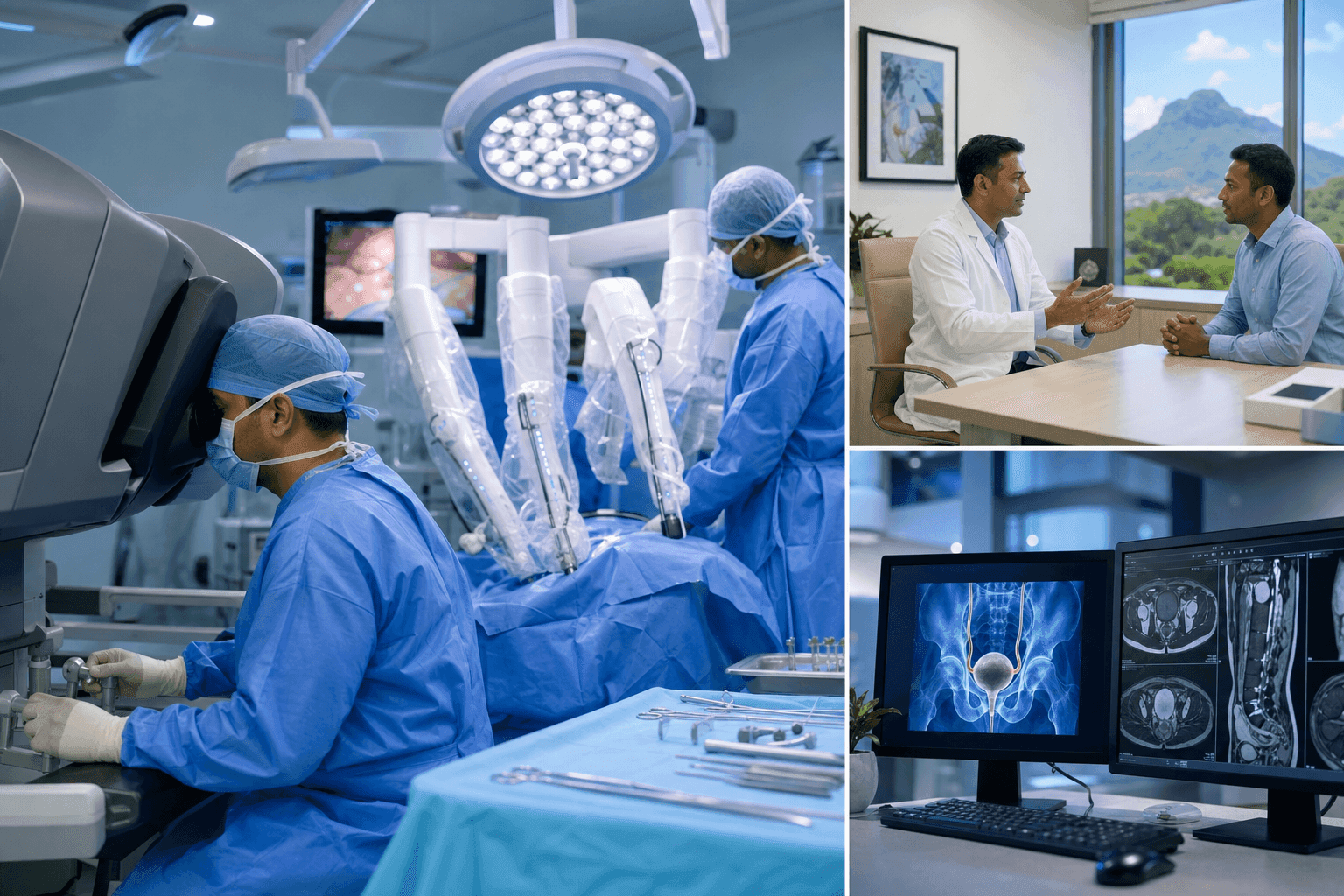
For operations on the kidney, adrenal gland, or other structures, surgeons can work through a few small incisions rather than one large one. A camera sends a magnified view to a screen, guiding the instruments. This laparoscopic approach means less pain and a quicker recovery than traditional open surgery.
Conditions commonly treated this way
Minimally invasive urology is used across a wide range of conditions. Kidney and ureteric stones are frequently managed with shock waves or laser through a scope. An enlarged prostate that blocks urine flow can be treated with laser or other keyhole techniques. Narrowings of the urinary tract, some tumours of the bladder and kidney, and problems with the drainage of the kidney can all be addressed without major open surgery. A urologist will explain which approach suits a particular problem best.
What recovery looks like
One of the biggest advantages for patients is the recovery. Because there is little or no wound, most people feel better within days rather than weeks. Many go home the same day or the next morning, need only simple pain relief, and return to work and family life quickly. This is especially valuable for people who cannot easily take long periods away from work, and it reduces time spent in hospital, which many patients appreciate. Your care team will give clear guidance on what to expect afterwards, including any temporary tube or catheter, how to manage mild discomfort at home, and the small warning signs, such as fever or heavy bleeding, that mean you should call for advice. Following that guidance closely helps recovery stay smooth and predictable.
Safety and honest expectations
Minimally invasive does not mean risk free. Every procedure carries some risk, and not every patient or every condition is suited to a keyhole approach. Sometimes an open operation remains the safest choice, for example with very large or complex problems. A good urologist will be honest about the options, explain the benefits and the limits of each, and help you make a decision that fits your health and your circumstances.
The picture in Mauritius
Access to modern urological equipment continues to grow in Mauritius, and many procedures that once required travel abroad can now be carried out on the island. If you are facing a urological problem, it is worth asking whether a minimally invasive option is available for you. Understanding these choices helps you take part in decisions about your care, and often leads to a smoother, faster, and more comfortable recovery.
Trusted urological care is the foundation of lifelong health and confidence. Explore the wider Medtech health ecosystem.